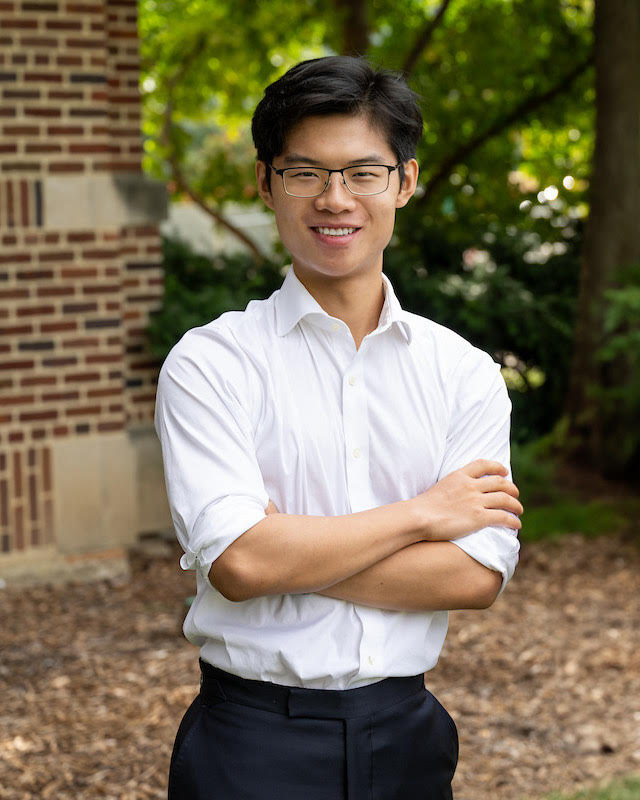
Huteng Dai
Linguistics · Weinberg Cognitive Science · AI Lab · MIDAS · MCAIM
prev. PhD Rutgers
FAQs from Prospective Students
- Founded 1963, with 15 research faculty
- One of the few departments where phonetics, phonology, neurolinguistics, sociolinguistics, and computational linguistics are all core strengths
- Strong connections with Weinberg Institute for Cognitive Science (graduate certificate program), U‑M AI Lab, and MICDE (PhD in Scientific Computing available as dual degree)
- Phonetics & Phonology Lab (EMA, sound booth, ultrasound)
- Computational Neurolinguistics Lab (EEG, fMRI)
- Computational Linguistics Lab (Great Lakes HPC cluster, 8-way RTX 6000 GPU)
- Few departments offer this range under one roof
PhD students can take up to 18 credits/term (about 6 courses), no extra tuition—including courses outside your PhD requirements: CS, engineering, statistics, music, whatever you want. It just so happens that U-M is leading in almost every field—your learning experience is only bounded by your own motivation and time.
- You would be surprised by how many activities this town offers.
- Summer is the best season to visit: you will see musicians playing music on the street, and my favorite is the Ann Arbor Art Fair, which turns the entire town into a giant open-air gallery
- One of the few college towns that is more crowded during weekends and holidays
- Check out Stanley Kubrick's photographs of Ann Arbor.
- Here is my take: the cold builds character and discipline
- Once you get used to it, you look forward to the peaceful winter days :)
- Ability to ask research questions from first principles
- Problem-solving skills. Evidence includes building tools and learning new skills and math as needed
- Strong background in machine learning and/or formal language theory
My goal as an advisor is to help my students become future leaders and succeed in academia or industry
My advisees choose their own research questions that are *big enough* to be interesting and *smaller enough* to be doable. We set our goals and make step-by-step plans together. Then I give unfiltered, radically honest feedback, hold their work to a reasonably high standard based on the goals we set.